How Billy Corgan's Perfectionism Nearly Tore Apart The Smashing Pumpkins During Siamese Dream
A deeply researched feature on the pressure, pain, and relentless ambition behind one of the defining albums of the 1990s
Luis Calleo
6/18/202615 min read
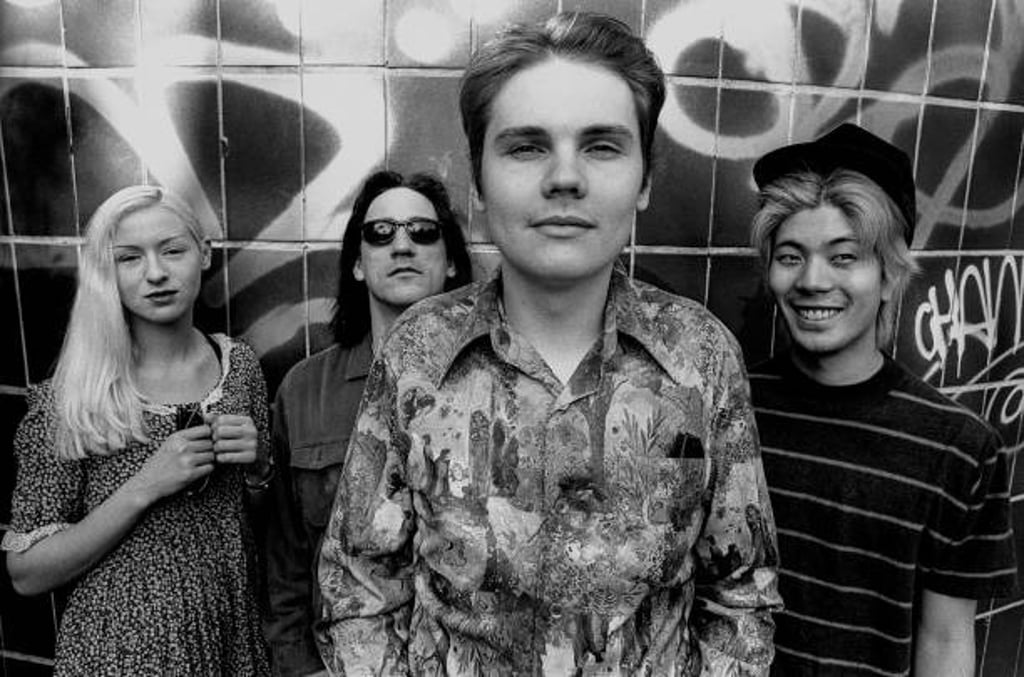
Photo by Paul Bergen/Redferns
Introduction
By the winter of 1992, the Smashing Pumpkins were in crisis. Their singer had stopped eating properly, was gaining weight rapidly, and had nearly stopped writing songs entirely. Their drummer was disappearing for days at a time into Chicago's underworld, feeding a heroin habit that had everyone in the band's orbit quietly terrified. Their guitarist and bassist, recently split from a four-year romantic relationship, could barely be in the same room. And somewhere in a parking garage in Chicago, Billy Corgan was scribbling lyrics that nobody around him could yet hear.
Out of this wreckage, the band would produce Siamese Dream — a 62-minute record that became one of the most celebrated albums of its decade, selling over six million copies worldwide and cementing the Smashing Pumpkins as something far more than a promising Chicago four-piece. That it was completed at all remains, depending on who you ask, a miracle, a testament to one man's titanium will, or an act of creative violence against the idea of a collaborative band.
The truth, characteristically, is all three.
The Promise of Gish
The Smashing Pumpkins had arrived. That much was clear by the spring of 1992, a year after their debut album, Gish, had found its footing in the underground.
Released on Caroline Records in May 1991, Gish was a strange and ambitious thing — an indie debut recorded in Madison, Wisconsin, for a budget of $20,000, that somehow sounded as if it had cost ten times that. The album initially peaked at only number 195 on the Billboard 200, but the story it told about the band's potential was unmistakable. Rolling Stone's Chris Mundy called it "awe-inspiring, with meticulously calculated chaos and a swirling energy." The album topped the college music charts and earned the band a devoted following among those plugged into the alternative underground.
The reason Gish sounded so polished for its budget was already revealing something important about Billy Corgan's nature. Vig later recalled that Corgan "wanted to make everything sound amazing and see how far he could take it; really spend time on the production and the performances." What Vig got from that Gish experience, as he later reflected, was a bandmate in perfectionism: a frontman who demanded that the studio become a laboratory, not just a capture device.
Corgan performed nearly all of the guitar and bass parts on Gish himself, which Vig later confirmed in an interview. This was not a one-off — it was, as would become clear, simply how Billy Corgan worked. And it was already producing friction.
Still, the band moved. They toured. They opened for the Red Hot Chili Peppers, Jane's Addiction, and Guns N' Roses. Gish was selling steadily. The Smashing Pumpkins had every reason to feel like something was building.
Then Nirvana happened.
Pressure on the Follow-Up
The release of Nevermind in September 1991 shifted the tectonic plates of American rock music. Overnight, alternative was no longer an underground category — it was the mainstream. Labels scrambled to sign anything with distorted guitars. Radio formats rearranged themselves. And bands like the Smashing Pumpkins, who had spent years in the underground earning their credibility, found that the rules had changed while they weren't looking.
Corgan told Rolling Stone in 1995, "We were on tour, selling out everywhere we go. Everything went cool, fine, dandy. Suddenly, boom: Nirvana. We went from being seen as future stars almost to has-beens, people saying, 'Well, if you were so good, this would have happened to you.'"
The Smashing Pumpkins were signed to Virgin Records, the parent of Caroline, and the label began exerting its own kind of gravitational pull. They were now expected to follow up Gish with something that could compete in a world where Nevermind had sold 15 million copies and Pearl Jam's Ten had sold millions more. Corgan felt "this great pressure to make the next album to set the world on fire."
That pressure landed on a man who was already cracking.
Corgan admitted to Blender, "I lost the ability to function. I didn't want to go outside. I was eating like a pig and gaining weight. I couldn't write songs." He experienced what he described as a nervous breakdown and began seeing a therapist. The therapy worked, in the most painful way possible — it opened a direct channel to the hurt he had been storing since childhood, and those excavations became the raw material for Siamese Dream's most devastating lyrics.
Meanwhile, the band itself was fragmenting. Wretzky and guitarist James Iha broke up as a couple during the grueling tour behind Gish. They'd been dating since 1988, and split just before the band's gig at the 1992 Reading Festival. And drummer Jimmy Chamberlin, the most gifted natural musician in the band by nearly everyone's reckoning, was spiraling deeper into heroin addiction.
The Smashing Pumpkins were not, heading into the most important album of their careers, a band in any conventional sense. They were four people with a shared name and almost nothing else in common except a collective anxiety about whether they would survive.
Entering the Studio
The decision to record in Georgia was not entirely about art. The band chose to record at Triclops Sound Studios in Marietta, Georgia, partly in order to "keep [Chamberlin] isolated from these types of temptations and stay focused," as Corgan once wrote in a blog post that openly detailed the singer's struggles with addiction. Cutting the drummer off from his Chicago connections was a practical necessity dressed up as a creative decision.
Triclops' 1970s-style room had high, woody ceilings that made for a modest decay. Most of the instrumentation was run through the studio's Neve console onto Studer A800s. It was an analog operation in an era that was beginning to experiment with early digital tools, which suited Corgan and Vig's mutual appetite for layered, textured production.
Butch Vig, who had just produced Nevermind for Nirvana and Gish for the Pumpkins, was the obvious choice to return. He had the trust of both Corgan and the label. He also had, by late 1992, a reputation as one of the most accomplished rock producers working in America. That reputation would be tested in ways he had not anticipated.
Vig later recalled that even before sessions began, Corgan had called him and said, "I'm not ready." Vig had gone down to Chicago to spend a day with him, and Corgan had played him snippets of demos in the car — never the full songs, just pieces. Something was there. But it was buried beneath a depth of anxiety that Vig could feel in the room.
Recording ran mainly between December 1992 and March 1993. Vig later stated, "Billy and I raised the bar really high. We wanted to make a very ambitious-sounding record. It was all done on analog tape, so it was time-consuming. We were working 12 hours a day, six times a week for about three months, and for the last two months we worked seven days a week, 14 or 15 hours a day, because we were behind schedule."
The pressure inside Triclops was immediate and relentless. And it only intensified as the sessions unfolded.
Billy Corgan's Pursuit of Perfection
What Corgan was chasing inside that studio defied easy description. It wasn't just a great album. He wanted something immense — a record that rewired the listener's nervous system. Vig captured it plainly: "Billy wanted to make a record that people would put on and say, 'What the fuck was that?' We wanted to have things going on in the left ear and right ear all the time."
To achieve that, Corgan and Vig were willing to work to lengths that bordered on obsessive. Corgan practically lived in the studio for the recording of Siamese Dream — he and Vig would sometimes work on a 45-second section of music for two full days, running 16-hour days for weeks at a time to achieve the sound Corgan wanted.
The guitar work alone was staggering in its complexity. Vig told Tape Op's Jake Brown, "Billy was a mad scientist with the guitars. A lot of times I would have to draw out a map, literally, of the song for his guitars with all these arrows, going, 'OK, this one goes to track 14 for the clean guitar through the second verse.' For instance, on 'Soma,' that was one of the biggest guitar maps I ever had. That was epic. I remember having to flip over the back of the track sheet and continue the map."
Because everything was being captured on analog tape, Vig sometimes had to perform razor-blade tape editing between takes — a painstaking process compared to the cut-and-paste ease of digital production that would soon transform the industry. Every guitar layer, every vocal stack, every tonal experiment was committed physically to tape and could not simply be undone with a keystroke.
The guitar tone itself was invented inside those sessions. Corgan achieved Siamese Dream's highly stylized tone with a litany of DOD pedals and a 1970s-era, silver-faced Big Muff Pi. His go-to guitars became '57 Eric Clapton re-issue Strats with Lace Sensor pickups. The legendary distorted wash of the record — what Vig and the band called their "super sonic fuzztone" — was partly accidental. An MSA fuzz unit was pulled out of an old pedal steel guitar by Triclops sound engineer Mark Richardson and placed in a simple metal box, and that unassuming object became the sonic foundation of tracks like "Cherub Rock" and "Hummer."
Corgan's own description of his psychological state during this period was stark. "It destroyed my health, you know, it destroyed my relationships, I went out of my mind." The sessions had become inseparable from the breakdown he had recently passed through. He was writing and recording simultaneously, the creative process feeding on the suffering rather than waiting for it to resolve.
Who Actually Played on the Album?
This question has followed Siamese Dream since before it was released, and the answer, documented by multiple participants, is more complicated than a simple accusation of musical theft.
Corgan often overdubbed Iha's and Wretzky's parts with his own playing. This was acknowledged by everyone involved. It was confirmed by both Wretzky and Corgan that Corgan played the bass tracks on Gish and Siamese Dream.
The justifications offered for this decision vary in tone but land in a similar place. According to engineer Jeff Tomei, "My opinion as to why is that Billy knew pretty much what he wanted. In all fairness to James and D'arcy, there is no way to get inside someone else's head and play exactly what they envision. I also don't think that they were as prepared for the record as Billy."
Wretzky herself stated that Corgan performed most of the guitar and bass parts because he could lay them down more easily in recording and with far fewer takes — which is a measured, almost diplomatic way of describing a situation that clearly wounded her and Iha deeply.
Chamberlin performed all drum parts on the album. His contributions to the record are not in dispute and, by many accounts, were stunning. His jazz-influenced fluidity gave Siamese Dream a rhythmic unpredictability that no drum machine or session player could have provided. His presence on the album, however inconsistent it was in the studio, was irreplaceable.
The ethical dimension of Corgan's decision was one he eventually grappled with publicly. He later told Rolling Stone, "Musicianship and technical vision are fine and good, but at some point you cross a line. No matter how good an album you've got, you've cut away the gut of your band."
It's a remarkably candid admission — and it comes embedded in the central tension of Siamese Dream's legacy. The album is extraordinary partly because of the precision Corgan enforced on it. It is also, partly because of that same precision, the document of a band that was beginning to dissolve from within.
Tensions Within The Smashing Pumpkins
The studio at Triclops became, over those winter months, a geography of avoidance. Vig later recalled, "D'arcy would lock herself in the bathroom, James wouldn't say anything, or Billy would lock himself in the control room." Three people retreating to their separate corners, and one person filling the recording space with his own voice, his own guitars, his own bass lines, his own vision.
Wretzky said of the period, "Before and during the recording of Siamese Dream, and during the writing process, things were kind of fucked up. I think we weren't mature enough not to take it out on each other."
Corgan told Spin later that year, "You know, I gave them a year and a half to prepare for this record... I'm surrounded by these people who I care about very much, yet they continue to keep failing me." He acknowledged that he had begun taking the failures of others personally: "If you really think about it, of course, someone doesn't do the job because they're lazy, or they don't think it's important. But I took it as, 'You're not worth going home and working on the song.'"
That kind of emotional arithmetic — where artistic failure reads as personal betrayal — is exhausting for everyone inside it. Corgan was demanding things of his bandmates that they either could not deliver or had stopped caring about delivering, and his response was to do the work himself while cataloguing the wound.
Chamberlin's situation was its own separate catastrophe. The strategy of removing him from Chicago hadn't worked. Corgan wrote in a blog post that "like some hidden clockwork, a 'friend' will suddenly appear at the studio to take him into 'Hot-lanta' for a night on the town." The drummer would vanish, sometimes for two or three days, leaving everyone else stranded and terrified. After one such incident, Corgan "put the hammer down," according to Vig, and had Chamberlin perform the drum part for "Cherub Rock" until his hands bled. Due to Corgan's urging, Chamberlin eventually checked into a rehab clinic.
The Smashing Pumpkins, in those months, were less a band than a weather system — four separate pressure fronts moving in and out of contact, occasionally colliding.
Butch Vig's Role in Holding Things Together
Butch Vig was not a therapist. He was a producer and musician from Wisconsin who had made a very good record with Nirvana and a very good record with the Smashing Pumpkins before, and who now found himself working inside a situation that required, in addition to his technical gifts, something close to emotional diplomacy.
Years later, Vig described Siamese Dream as the record he was most proud of producing: "I have to say Smashing Pumpkins' Siamese Dream. I'm very proud of it because that was a really difficult record. It was before Pro Tools, Billy and I set the bar really high in terms of how sonically we wanted it to sound. I had to deal with all of the dysfunctionality of them as four people together, but I think the record still sounds really good. It has a sound to it that we kind of came up within the studio, and to me, it still sounds as powerful now as it did when I recorded it."
Vig's role was partly to keep Corgan's perfectionism productive rather than paralytic. When the two of them spent two full days on a 45-second passage, it was Vig who had to judge when enough was enough — when the additional take was yielding diminishing returns and when another hour on a guitar tone was, in fact, the right call.
One story that Vig has shared in interviews illuminates how that balance worked in practice. Recording "Disarm" proved particularly difficult, and the band kept putting it off. With all other songs completed and their backs to the wall, they attempted to record it with the full band. They tried various arrangements with the traditional Pumpkins sound — ringing guitars, pulsating bass, pounding drums. Nothing worked. Out of frustration, Corgan walked into the control room with his acoustic guitar, closed his eyes, and sang the song. Vig recalled that it was "so simple and emotionally direct, it made the hair rise on the back of my neck."
That moment — a stripped-down, instinctive performance emerging from weeks of elaborate sonic construction — is a useful lens on what Vig was doing throughout the sessions. He was creating the conditions in which the right thing could happen, even when neither he nor Corgan knew in advance what form that right thing would take.
Vig has also said directly, "Making Siamese Dream was really hard, because we felt a ton of pressure, and the band was pretty fragile." He navigated that fragility without breaking it open entirely. The album got finished.
Finishing Siamese Dream
By the time the recording was complete, the people who had made it were spent in ways that went beyond ordinary exhaustion.
Corgan and Vig felt too emotionally exhausted to mix the record themselves. Corgan suggested engineer Alan Moulder, due to his work on My Bloody Valentine's Loveless. Moulder booked two weeks in a studio to mix the album; the mix ended up taking 36 days to complete. Even the finishing process had overrun.
The album was completed four months and $250,000 over budget. Virgin had grown impatient. The band had refused to let the label cut corners on sound. Corgan's vision, which had cost everyone so much — in time, money, personal relationships, and psychological health — had been protected to the end.
The mixing was handled by Moulder at Rumbo Recorders in Canoga Park, California, and subsequently mastered at Masterdisk in New York City. Virgin executives had come to the studio at one point to observe the band, hearing about their problems, but were pleased with the demo of "Today" and did not soon return. That early demo had apparently been enough to convince the label that whatever was happening in Marietta, Georgia, was worth the agony of waiting for it.
Release, Reception, and Breakthrough
Siamese Dream was released on July 27, 1993, in the United States. It debuted at number ten on the Billboard 200 — an immediate statement that this was not an underground record finding its footing slowly. It arrived fully formed and was received accordingly.
Rolling Stone's Lorraine Ali called the album "a strong, multidimensional extension of Gish that confirms that Smashing Pumpkins are neither sellouts nor one-offs." Entertainment Weekly's David Browne praised the band for living up to the "next Nirvana" pressure, writing: "In aiming for more than just another alternative guitar record, Smashing Pumpkins may have stumbled upon a whole new stance: slackers with a vision."
Not everyone agreed. Simon Reynolds in The New York Times argued that "fuzzed-up riffs and angst-wracked vocals are quite the norm these days, and Smashing Pumpkins lacks the zeitgeist-defining edge that made Nirvana's breakthrough so thrilling and resonant." But the mainstream press dissent was a minority position. The album sold. The singles — "Cherub Rock," "Today," "Disarm," "Rocket" — reached the upper regions of the alternative charts. By the end of 1993, the Smashing Pumpkins were no longer a band fighting for their place in the new alternative landscape. They had secured it.
The album was nominated for the Grammy Award for Best Alternative Music Performance and the band received a nomination for Best Hard Rock Performance with Vocal at the 36th Annual Grammy Awards.
Siamese Dream was eventually certified 4× Platinum by the RIAA, with the album selling over six million copies worldwide.
Success, however, did not cure what the sessions had broken. Chamberlin's addiction continued to worsen; he would eventually be fired in 1996 following the drug-related death of touring keyboardist Jonathan Meltzer. Wretzky's relationship with Corgan deteriorated steadily for the rest of the decade. The wounds inflicted during those months in Marietta were healed, if at all, only slowly and only partially.
The Album's Legacy
Three decades on, Siamese Dream occupies a fixed position in the canon of 1990s rock — not merely as a commercial artifact but as a statement of what the genre could hold if someone pushed hard enough.
The album has been described as "one of the finest alternative rock albums" and is widely regarded as one of the greatest albums of the 1990s. Alternative Press ranked it fourth on its list of the best albums of the decade, Pitchfork ranked it 18th, and Spin ranked it 23rd. Rolling Stone placed it at number 341 on its 2020 list of the "500 Greatest Albums of All Time."
What gives the album its particular staying power is not simply the guitar arrangements or the production scale — it's the emotional specificity beneath both. "Disarm" is not a protest song or a mood piece; it is a man with a very particular childhood pain trying to find a shape for it in music. "Today" is not straightforwardly about joy or hopelessness; it is both, held in tension, which is the more accurate emotional state. "Soma" is seven minutes of what grief sounds like when it has not yet found language and is still searching through noise.
Corgan himself has often called Siamese Dream his favorite Smashing Pumpkins album. He told one interviewer, "Even though it wasn't the one that sold the most, it's the one that seems to have come through the best."
The album also marked the beginning of a longer argument about who the Smashing Pumpkins actually were — a collaboration or a vehicle. Every subsequent album and reunion has had to reckon with the fact that Siamese Dream, the record that proved the band could be great, was also the record that showed one person doing most of the work.
That argument has never fully resolved. It may be the most honest legacy the album has.
Conclusion
The making of Siamese Dream is a story about what happens when the will to make something perfect collides with the reality of other people. Billy Corgan had a vision for an album that was more ambitious than anything his band had attempted, more demanding than anything the alternative rock moment was expecting, and more personally costly than he could have predicted. He pursued it with a ferocity that excluded, diminished, and wounded the people around him — and produced something extraordinary.
The question the album poses is not whether perfectionism is a virtue or a vice. It is, demonstrably, both. The question is what you are willing to pay for it, and what you expect others to pay on your behalf.
Wretzky and Iha paid. Chamberlin paid in a different coin. Vig, who had to manage the human costs while achieving the sonic ones, paid in his own way. Corgan paid too — in health, in relationships, in the quiet knowledge that the band he had built was beginning, in those winter months in Georgia, to come apart.
What remained was Siamese Dream. Whether that bargain was worth it depends, perhaps, on where you were sitting. For the tens of millions of people who have found something essential in its songs over the past thirty years, the answer tends to be yes.
For the people inside that studio, it was never so simple.
Research note: All facts in this article are drawn from the established historical record, including Billy Corgan's interviews with Rolling Stone (1995), Blender, and Spin; producer Butch Vig's interviews with Tape Op, Gothamist, and PSN Europe; engineer Jeff Tomei's documented accounts of the recording sessions; D'arcy Wretzky's public statements; and contemporaneous music press coverage.